
Fiona Phillips’s husband on her life with Alzheimer’s: ‘Bit by bit, she’s not there’
After a devastating diagnosis at just 61, the presenter and her husband have been documenting her life and the disease’s corrosive effect

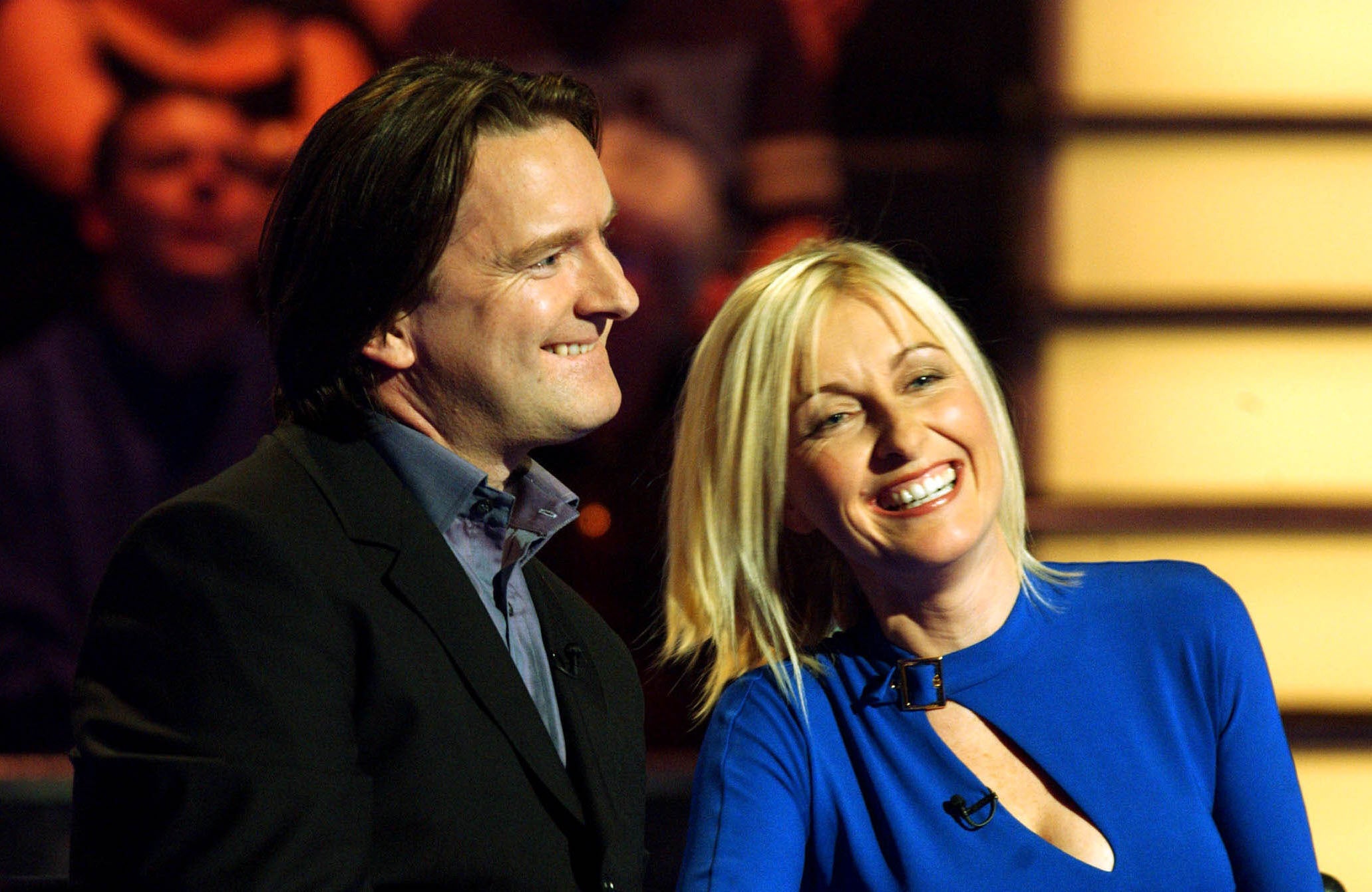
Martin Frizell cannot decide what to do with his wife Fiona Phillips’s recipe books. Or her designer clothes.
Before she was diagnosed with early-onset Alzheimer’s disease in 2022, at the age of 61, the former breakfast television presenter adored cooking. She loved dressing up in glamorous outfits.
But all that’s gone along with her short-term memory. “Fiona hasn’t cooked in two years,” explains Frizell, the former editor of ITV’s This Morning. “Part of the heartache now is she’s got this dressing room full of the most amazing clothes but this horrible disease means she’s more than happy just wearing the same T-shirt, the same trousers, the same thing – day in, day out. She doesn’t really have much appetite for all those fabulous things in her wardrobe.”
He pauses. “What do I do with all these clothes? It’s things like cookery books as well. I’ve got a pile on the floor downstairs in our basement that are never going to see the light of day again. Do I take them to the dump? They’re all Fiona’s cookery books, but she’s never going to open one again.”
It is these sorts of mundane domestic details that shine a light on what it’s really like to live with Alzheimer’s – the most common cause of dementia in the UK. Not the statistic, scary though it may be, that one in three people born today is projected to develop dementia in their lifetime, according to Alzheimer’s Research UK. Nor the knowledge that this is “a progressive brain disorder that slowly destroys memory and thinking skills, eventually impacting the ability to carry out even simple tasks”.
Nothing you can google on Alzheimer’s will ever do justice to what Fiona and her family are going through right now.
The unvarnished truth is laid bare in the GMTV star’s brave new book, Remember When: My Life with Alzheimer’s, which she has written with the help of Martin and the journalist Alison Phillips (no relation, the former editor of the Daily Mirror for whom Fiona wrote a column for more than a decade).
Martin, 66, who married Fiona, 64, in 1997, had intended to write “a few paragraphs” filling in the gaps in his beloved wife’s failing memory – and then, he admits, anger started bubbling to the surface.
“I ended up doing 24,000 words,” he sighs. “I started off writing about what a great woman she is and just how horrible it is and dreadfully unlucky that she is the latest in the long line of her family to get it. Then I just got very angry as to what little support there is. You realise that there’s about 70,000 people who have early-onset Alzheimer’s, a million or so roughly in the country who have Alzheimer’s, and you realise that there’s not a lot of help out there. As a family, we just kind of get through it and at some point we will need more support, but there’s just nothing really.”
Recalling the “dreadful” day Fiona was diagnosed, he continues: “We went to [the hospital] to get the results of tests, and the consultant said: ‘I’m sorry, but I believe it’s Alzheimer’s.’ And it’s like, oh. Gulp. Then he said, ‘I’ll go and get you a cup of tea, here’s some reading for you.’ He pushed a leaflet across the table and on the front cover was an old couple, with a Zimmer frame, basically saying: ‘How to live well with Alzheimer’s.’ It just doesn’t relate to you.”
As Martin recalls in the book: “Fiona had just turned 61. She was wearing skinny jeans and high-heeled boots. This was a degenerative disease for old people like the ones on the leaflet – it shouldn’t be happening to someone as young as Fiona. It was utterly gut-wrenching. Sickening. We just looked at each other. S–t! What are we going to do now?”
Despite nursing both her mother, Amy, and her father, Neville (known as Phil), through Alzheimer’s, the diagnosis came as a complete shock to Fiona, who had been putting her symptoms down to the menopause. As well as suffering from “brain fog”, she had become increasingly withdrawn, depressed and, at times, crippled by anxiety.
But having watched all this unfold in his once-gregarious, socially confident wife, Martin saw the diagnosis coming.

“Fiona was the life and soul of the party. I mean, she had no off switch, which was the thing I loved about her, even though it could be infuriating at times. She’d stay there until the end of anything and drink everything until the end.
“She loved life, and to gradually see this person becoming more withdrawn and then just being frightened about the slightest thing, getting really worked up about immaterial matters, which had never happened before, was really upsetting for all of us.
“I’d seen her decline, a change in behaviour and mood swings. I knew it had to be more than brain fog or menopause; that it had to be something quite big. So, I kind of knew it was coming to a degree, but even when it does come, it’s still awful.”
If finding out the news they had been dreading weren’t bad enough, they then had to endure an anxious two-week wait to discover whether it was genetic – and could be passed on to their sons, Nat, 26, and Mackenzie, 23.
“Luckily, the blood test came back negative. The consultant said: ‘The good news is it’s not hereditary, your children don’t have to worry about that.’ I said, ‘But how do you explain her parents and her getting it?’ and the phrase he used is that she was just ‘predisposed’ to it. But I still don’t understand what that means.”
While most cases of Alzheimer’s are not directly inherited, certain factors can increase a person’s predisposition to the disease. These include family history, genetic factors such as the APOE gene, and other health conditions such as diabetes, heart problems and high blood pressure.
Having read about the hectic life Fiona led in the 1990s and 2000s – juggling 3am starts for GMTV as a mother of young children while caring for both parents, who lived miles away in Wales – I wonder whether stress may have been a contributing factor. The pressure hit fever pitch in 2005 when Eamonn Holmes exited the show, leaving Fiona as the main presenter. She also participated in the third series of Strictly Come Dancing that year.
“It could be stress but she was always very fit. They never quite know what the cause is, but they say that some bad habits could lead to Alzheimer’s.
“Hands up, we have lived life – not to the extremes – but we lived well. In our younger days, we would do a bottle of wine at night… each. That’s all gone now but I don’t really want to spend too much time on it because then I just feel guilty myself that I should have done more.”
Guilt features a lot in our interview. As Martin and I chat in the studio of my Telegraph podcast, The Daily T, he apologises for his wife’s absence. “She would love to have been here herself but you know, she’s not in the best place.”
Then he apologises that he is here in her place: “It’s not my book,” he insists. “It’s Fiona’s. I’m just here to spread the word.”
He also clearly feels bad for sometimes speaking about his wife in the past tense, but as he puts it, he is “living with grief on a daily basis” for the woman he has lost. “It’s like someone has passed because bit by bit, she’s not there. One bit will come back and then another bit will go. It’s really tough.”
The couple – who first met when they were both working as roving reporters for GMTV, which Martin would also go on to edit – married in Las Vegas in 1997. They dated for just four weeks before the softly spoken Scotsman proposed.
“She had been the LA correspondent, working in Hollywood and then when Anthea Turner left, there was talk of who was going to replace her. Fiona didn’t think for a second that she was in with a chance and then they chose her to sit alongside Eamonn and she came back. We got to know each other a bit more; we went to Ascot one day, as you do in daytime television, and then we went for a bit of late lunch and that was it, really.”
What was it about Fiona that made him propose within a month?
“Well, she’s the nicest person I’ve ever met. In the catty, backstabbing, tough old world of journalism that we grew up in, not everyone’s nice, but she wasn’t just a journalist, she was honestly the nicest person. She never had a bad word to say about anyone.
“She used to infuriate me because she would take as much time as was needed to say hello to people. She was always getting stopped. She was a lot more generous with her time than I ever was.”
Now, almost all of Martin’s time is spent looking after Fiona at their home in Wandsworth, south London, with brief respites for work and sailing (he part-owns two boats moored in Hampshire). “When she was diagnosed, people would say: ‘And how are you?’ And I’d say, ‘Well, listen, don’t worry about me. I’m not the one that’s got Alzheimer’s.’ You feel selfish but you do have to find time for yourself. You do have to find that escape route that gives you a chance just to charge your batteries for the next bit.”
Martin left This Morning after 10 years at the helm in February and is now balancing a true crime podcast project with his caring for his wife with the help of Nat, who is in the Army, and Mackenzie, who works in fashion but still lives at home.
Soon after she was diagnosed, Fiona was placed on a drug trial that required Martin to inject her in the stomach three times a day. Both felt that it helped to stabilise her condition – but it lasted only a year. As Martin concedes: “There’s no magic pill that’s going to stop it.”

Although Fiona still has moments of lucidity, she has deteriorated over the course of the past 12 months and now needs help with even the most basic of tasks, including brushing her teeth.
“If you look back over the last five years, for the first four, she was still very present and here with us. So I didn’t feel I was losing her from day one. But recently, she’s been in quite a lot of pain. With Alzheimer’s come all sorts of secondary complications – and that then adds to the confusion. The past 12 months have been particularly difficult, not just for her, but for us as well, trying to find a way through what’s causing the pain for her. And with pain comes delirium; even more psychotic kinds of episodes that are frightening for all of us.”
Martin does not hold back in the book about just how hard it has been. He writes: “Anyone who thinks they could endlessly explain the same thing over and over again without ever becoming frustrated or losing their patience just needs to try it. Not once, not now and again, but every single day.”
He explains: “Sometimes, you wonder, is it just attention-seeking that’s going on? Like, can you really not see that that’s a toothbrush and that’s what you do with it? Can you really not?
“When I left This Morning, the press said, ‘Oh, he’s leaving to care for his wife.’ I made it quite obvious to anybody who wanted to listen that I’m not going to be the Mother Teresa of Wandsworth. I’m not the Archangel Gabriel. I have my moments and it’s frustrating. Once I realise I’m reaching the limit, I take myself off into another room and I’ll almost feign being ill myself and say, ‘I really feel awful, I’ve got to lie down.’ And all of a sudden, this maternal thing kicks in. How can I help? What do you need? And she will leave me. It’s back to the old Fiona again.”
What they never do, though, is discuss the fact that Fiona has Alzheimer’s. As Martin writes in the book: “We have not once discussed her illness since her diagnosis.”
Really? “She’s obviously always thinking about it subconsciously, but if you mention the word Alzheimer’s or dementia, it brings it to the front and it’s upsetting because she knows the way it’s going. Both parents died from it. She was an ambassador for Alzheimer’s charities.”
While Fiona has chosen to isolate herself, spending a great deal of time indoors, Martin has been upset by how socially isolated they have been made to feel as a couple.
“You become almost invisible,” he says. “We didn’t go to lots of dinner parties, but we went to a few. They all dry up.
“We still have some close friends, which is great. But I think people think, oh gosh, Fiona, maybe she doesn’t look the same, or they don’t know what to say, or it brings into sharp focus their own mortality. So you don’t get invited out much.”
He recalls “one of the saddest occasions” when a couple they knew physically got up and took their coffees outside when they saw Martin and Fiona sit down next to them in the local café. “People don’t know how to approach or converse with people who have dementia.” He adds that the best thing anyone can do to support a family struggling with Alzheimer’s is to cook for them. “Just leave something on the doorstep and walk away.”
Another low was when This Morning’s former presenters Phillip Schofield and Holly Willoughby were embroiled in a row about jumping the queue to visit the late Queen lying in state in 2022. “At the time, Fiona was still going out to the shops and things and she was chased down the road by journalists, asking what I knew about it all. And, she didn’t know, she was confused about it and it didn’t help.” That was a year before they made Fiona’s diagnosis public in July 2023.
The saddest part of all is that there is little that Martin – or anyone – can do to stop the progression of the disease. “Just as the cognitive test for Alzheimer’s is 50 years old, so are the treatments,” he says. “She’s on pretty much the same drugs as her mum was, and she died in 2006.
“Cancer seems to get all of the attention and all of the research money.”
Although the day will inevitably come when Fiona will need professional care, Martin insists they’re coping.
“For periods, she is still physically present. And I’d argue for anyone to meet her in the street on a good day, she’ll look just the way she was. We are determined that it’s going to remain that way. So she’s got her hair appointment in a few days’ time. She gets her hair coloured every few months. I’m a bit lax – I’ve got to get her manicure and pedicure done, but it’s really important. She’s a very dignified woman.
“And she still amazes me. You’ll be having what you think is just another wretched day and then you’ll be watching something or talking about something and she’ll come out with an observation that is absolutely of the moment. Sometimes her memory is better than mine in terms of what happened five years ago. Or if I put some music on, she’ll know all the lyrics.

“We have this orchid that someone gave us. It was about six months ago. I looked at it this morning and it’s got five blooming flowers on it. Now I haven’t touched it. The children haven’t touched it. We have a cleaner that comes in once a week. She hasn’t touched it. So I can only presume that Fiona has.”
Pointing to his head, he adds: “Somewhere in there, you know, she has got the exact quantity of water that these things need to keep going and flourishing. I’ve never seen anything like it. It’s the most astonishing, beautiful orchid. So yes, parts of her are closing down but she’s still in there. She’s still with us.”


